

Extreme Arizona Heat
Roof temperatures can become significantly hotter than the surrounding air. Years of heat exposure can dry out asphalt-based underlayment, causing it to become brittle, crack, and lose flexibility.
Tile roof underlayment replacement — the lift-and-reset — restores the waterproofing under a tile roof that still looks fine from the street. It is the most common work we do in Phoenix.
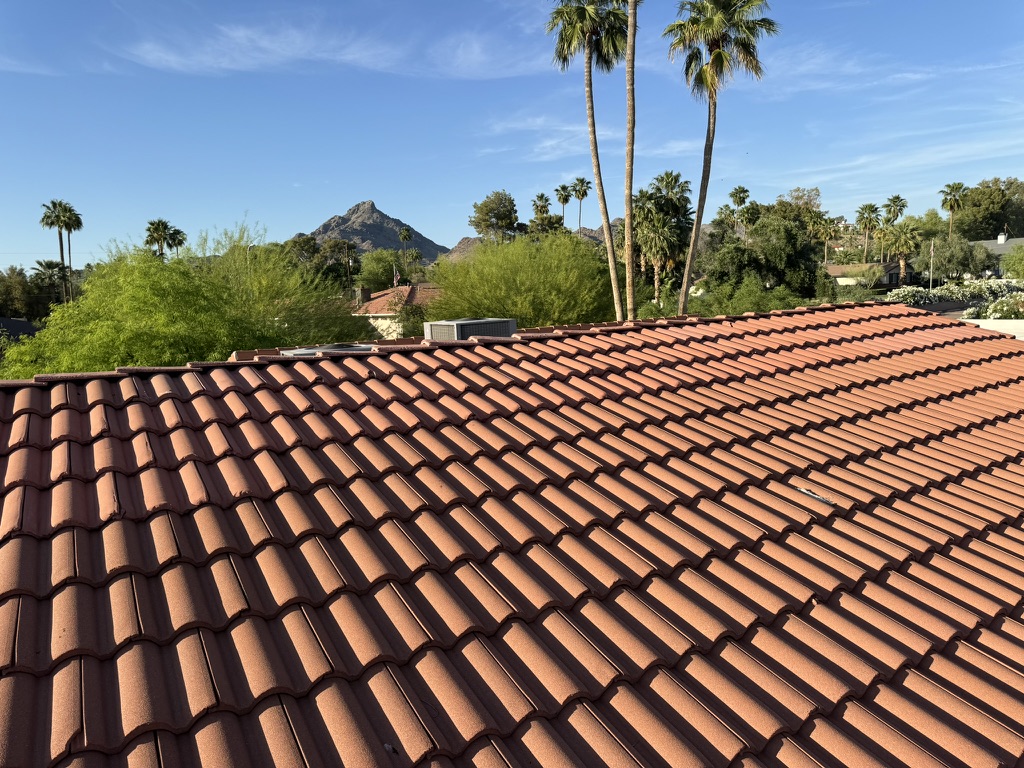
Concrete and clay tiles are extremely durable, but they are not the roof's primary waterproof barrier. Wind-driven rain can pass between and beneath the tiles. The underlayment installed over the roof deck is what helps prevent that water from entering your home.
Over time, Arizona's intense heat, temperature changes, monsoon storms, and normal material aging can cause the underlayment to dry out, crack, shrink, or separate. The tiles may still look perfectly good even though the protective layer underneath is beginning to fail.
The Tile Roofing Industry Alliance's installation standards emphasize the importance of properly installed underlayment, flashing, fasteners, penetrations, and drainage details as parts of the complete tile roof system. Tile Roofing Industry Alliance installation manual
The lifespan depends on the material, installation quality, ventilation, roof design, maintenance, and exposure to heat.
| Underlayment type | General service-life range |
|---|---|
| Traditional asphalt-saturated felt | Approximately 15–25 years |
| Higher-grade or double-layer felt systems | Approximately 20–30 years |
| Synthetic underlayment | Often 25–40+ years |
| Self-adhered modified-bitumen membrane | Often 30–40+ years |
These are general planning ranges—not guarantees. Arizona heat can accelerate aging, and workmanship problems can cause even relatively new underlayment to fail prematurely.
A professional inspection is usually recommended once a tile roof reaches approximately 15–20 years old, especially if its maintenance or reroofing history is unknown.
Roof temperatures can become significantly hotter than the surrounding air. Years of heat exposure can dry out asphalt-based underlayment, causing it to become brittle, crack, and lose flexibility.
Roofing materials repeatedly expand during hot days and contract as temperatures fall. That movement places stress on the underlayment, flashing, seams, fasteners, and roof penetrations.
Underlayment may fail early when it is improperly lapped, inadequately fastened, damaged during tile installation, or installed without correctly integrating flashing and penetrations.
Leaks frequently develop around valleys, walls, chimneys, skylights, plumbing vents, and HVAC penetrations. Failed flashing can allow water beneath the tile system even when the field tiles remain intact.
Cracked, missing, or displaced tiles expose the underlayment to sunlight and direct weather. Synthetic underlayments can offer improved durability compared with conventional felt, but exposure limits and installation requirements still depend on the specific product.
Arizona storms can push water beneath tiles and into vulnerable laps, valleys, penetrations, and flashing transitions. Wind can also loosen or shift tiles, leaving the underlayment exposed.
Walking on a tile roof can crack tiles and damage the material underneath. Damage is especially likely when service technicians or inexperienced contractors do not understand how to safely access tile roofing.
Leaves, bird nests, dirt, and other debris can obstruct valleys and drainage paths. Water may then back up beneath the tile and place additional stress on the underlayment.
Birds, rodents, and insects may enter beneath loose tiles or damaged bird stops. Their activity can disturb the tiles, underlayment, and flashing.
Underlayment exposure limits and installation requirements vary by product — see GAF underlayment technical information.
Contact a roofing professional if you notice:
A leak does not always appear directly below the failure point. Water can travel along the underlayment, roof deck, or framing before becoming visible inside the home.
During a tile roof underlayment replacement, reusable tiles can be carefully removed and stacked. The deteriorated underlayment and old flashing are removed, damaged decking is repaired as necessary, and a new waterproofing system is installed. The original tiles are then reset, with broken or unusable pieces replaced as needed.
This process is commonly known as a tile lift-and-reset or tile re-underlayment.
Whether tiles can be reused depends on their condition, availability, fastening method, brittleness, and the percentage damaged during removal.
A localized repair may be appropriate when the damage is limited to one identifiable area, such as a broken tile, plumbing penetration, or small flashing defect.
A complete lift-and-reset may be the better long-term solution when:
Patching one area cannot stop deterioration occurring throughout an aging underlayment system.
Every project we complete carries a minimum five-year workmanship warranty, separate from the manufacturer's material warranty on the underlayment system itself. If a detail we installed is the reason water gets in, we come back and correct it.
If your tile roof is approaching 20 years old—or you have noticed leaks, stains, slipped tiles, or recurring repairs—it may be time to inspect the underlayment. A professional inspection can help determine whether the problem requires a targeted repair or a complete tile lift-and-reset.
(412) 713-8369 — call for a tile roof inspection.